He Threw Away 8,000 Bitcoin by Accident — Now It’s Worth Over $500 Million
He mined Bitcoin when it was almost worthless… then accidentally Threw Away 8,000 Bitcoin. Today, those 8,000 BTC are worth over half a billion dollars. The true story every crypto investor needs to read.
CRYPTO NEWS
2/13/20263 min read
The $500 Million Mistake That Shocked the World
In 2013, a routine clean-up turned into one of the most expensive mistakes in financial history.
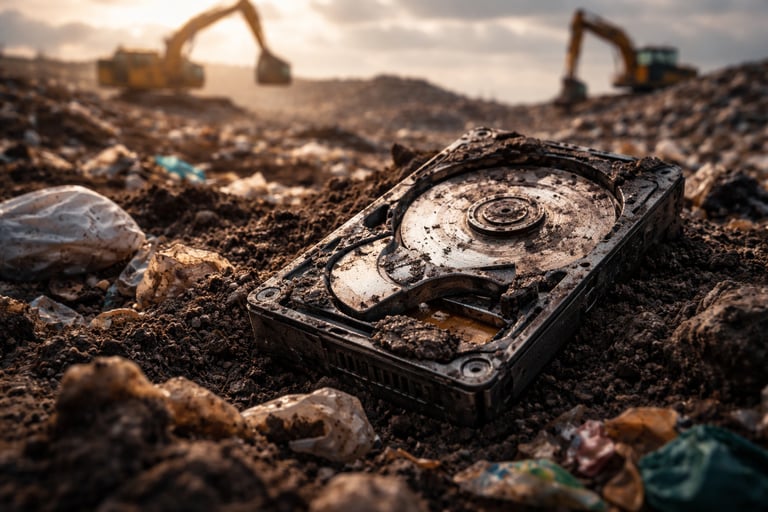
An IT worker from Newport named James Howells accidentally threw away a hard drive.
That hard drive contained the private keys to 8,000 Bitcoin.
At the time, Bitcoin was trading near $100. Painful — but survivable.
Today, depending on market price, those same coins have been worth more than $500 million at peak cycles.
And they are still buried in a landfill.
When Bitcoin Was Worth Almost Nothing
Back in 2009–2011, Bitcoin was an experiment.
Created by the mysterious Satoshi Nakamoto, Bitcoin was dismissed as:
Internet money
A tech hobby
A fringe idea
Early adopters mined coins using basic home computers. Rewards were high. Competition was low.
James Howells mined thousands of Bitcoin during those early years — not knowing he was accumulating what would later become one of the scarcest assets on Earth.
Few imagined Bitcoin would grow into:
A trillion-dollar asset class
A globally traded investment
A digital alternative to gold
An institutional-grade financial instrument
What looked like digital pocket change eventually became digital gold.
The Accident That Changed Everything
Here’s what happened.
Howells stored his Bitcoin wallet keys on a laptop hard drive.
Years later, while cleaning his home, he had two identical hard drives:
One empty
One containing access to 8,000 BTC
He mistakenly threw away the wrong one.
The garbage was collected.
It was transported to the landfill.
It was buried under thousands of tons of waste.
By the time he realized the mistake, recovery was nearly impossible.
And here’s the critical detail:
In Bitcoin, if you lose your private key, you lose your coins permanently.
There is:
No password reset
No customer support
No central authority
Decentralization gives full control — but also full responsibility.
The Growing Value of a Lost Fortune
When Bitcoin’s price surged, the loss multiplied.
Let’s break down the numbers:
At $10,000 per Bitcoin → $80 million
At $30,000 per Bitcoin → $240 million
At $60,000 per Bitcoin → $480 million
At peak highs → Over $500 million
Every bull market increased the value of the buried hard drive.
Without moving.
Without being accessed.
Just sitting underground.
The Billion-Dollar Recovery Plan
As Bitcoin’s value exploded, Howells attempted to recover the drive.
He proposed an excavation of the landfill in Newport, offering:
Millions in funding
Advanced robotics and AI sorting systems
Environmental protection plans
A share of the recovered Bitcoin for the local authority
However, officials refused.
Their concerns included:
Environmental damage
Toxic gas exposure
Legal risks
Extremely low probability of success
The landfill remains sealed.
The Bitcoin remains inaccessible.
Why This Story Terrifies Investors
This isn’t just a viral headline.
It exposes the core reality of crypto ownership.
Bitcoin operates without banks or intermediaries. That means:
You are your own bank
You control your access
Security is entirely your responsibility
Traditional finance has safety nets.
Crypto does not.
If your private key is lost, there is no appeal process.
That permanence is powerful — and unforgiving.
Millions of Bitcoin Are Already Lost
Blockchain researchers estimate that between 3 to 4 million Bitcoin may be permanently inaccessible due to:
Forgotten passwords
Destroyed storage devices
Lost seed phrases
Early adopters who never backed up wallets
Bitcoin has a fixed maximum supply of 21 million coins.
Every lost coin reduces circulating supply.
Ironically, lost Bitcoin increases scarcity — potentially strengthening the value of remaining coins.
But for those who lost access, the opportunity is gone forever.
The Psychology of Regret
The emotional weight of this story is enormous.
Imagine discovering that something you threw away is now worth generational wealth.
Psychologists refer to this as “counterfactual regret” — mentally replaying alternative outcomes.
If only I had checked twice.
If only I had created a backup.
If only I had been more careful.
Every time Bitcoin rallies, the story resurfaces globally.
And each rally increases the value of that buried fortune.
The loss grows — even without being touched.
Could the Hard Drive Still Be Recovered?
Technically possible, but extremely unlikely.
After years underground, the device would face:
Moisture damage
Corrosion
Physical compression
Electronic decay
Even if found, advanced forensic data recovery would be required.
And if the wallet file is corrupted?
The coins remain locked forever.
Blockchain technology preserves ownership records.
But it cannot restore lost access.
The Bigger Lesson for the World
This story is not just about one man.
It represents the transformation of wealth in the digital age.
The internet created online empires.
Crypto created decentralized wealth.
But it also created irreversible risk.
The lesson is clear:
Small assets today can become massive fortunes tomorrow.
Early opportunities often look insignificant.
But security is everything.
What Every Crypto Holder Should Do
If you own digital assets:
Use a reputable hardware wallet.
Store seed phrases offline — never digitally.
Keep secure backups in separate locations.
Treat your private keys like physical gold.
In decentralized finance, responsibility cannot be outsourced.
The Hard Drive Beneath the Landfill
The 8,000 Bitcoin still exist.
They are recorded on the blockchain.
They have not moved.
They cannot move — without the private key.
Somewhere beneath layers of garbage in Wales lies a device containing one of the largest lost personal fortunes in modern history.
A small object.
A massive fortune.
An irreversible mistake.
Final Reflection
The man who threw away 8,000 Bitcoin didn’t know he was discarding half a billion dollars.
He thought it was junk.
The digital age has changed how fortunes are made — and how they are lost.
The next transformative asset may look small today.
The real question is:
Will you recognize it?
And will you protect it?