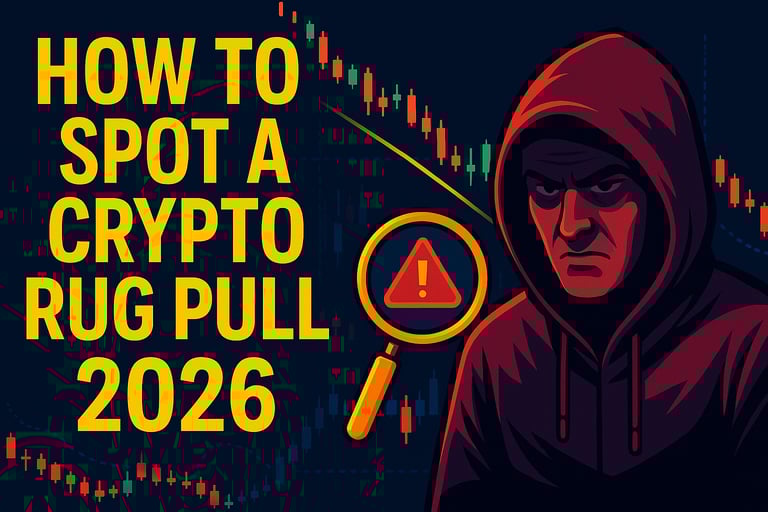
How to Spot a Crypto Rug Pull in 2026 – Detection Signs, Red Flags, and Investor Protection Guide | DropFinder Research
Learn how to spot a crypto rug pull in 2026 by identifying suspicious token behavior, fake volume, social manipulation, contract risks, anonymous teams, and liquidity traps. This DropFinder guide helps global investors avoid scams and protect their funds in the evolving crypto landscape.
CRYPTO NEWS
11/22/20253 min read
Introduction – Why Rug Pull Scams Are Evolving in 2026
Crypto rug pulls are not new, but in 2026 they are becoming more sophisticated, faster, harder to detect, and more psychologically manipulative. As the crypto market grows globally, new investors enter without understanding technical risks, tokenomics, liquidity locks, contract permissions, or scam behavior patterns. Scammers now use advanced marketing, AI-generated communities, paid influencers, fake exchange listings, artificially engineered hype cycles, and deepfake founders to trick investors.
A rug pull occurs when the creators of a cryptocurrency project drain liquidity, disable withdrawals, dump tokens, or vanish — leaving investors with worthless assets. In 2026, rug pulls are disguised behind:
polished branding
convincing websites
fake partnerships
influencer promotions
community manipulation
artificially pumped charts
This is why learning how to spot a rug pull before investing is the single most important survival skill for anyone in crypto.
What Exactly Is a Rug Pull?
A rug pull happens when a crypto project:
abandons the project suddenly
removes liquidity from the pool
dumps the supply on investors
blocks selling permissions
shuts down communication channels
The result:
Investors cannot sell, withdraw, or recover funds.
There are three major rug pull types:
Liquidity Rug Pulls – creators drain liquidity pools
Sell-Lock Rug Pulls – holders cannot sell tokens
Slow Rug Pulls – team exits gradually over time
Understanding them is the first step to detecting danger.
Why Rug Pulls Will Increase in 2026
There are several reasons:
more new investors entering
rising meme coin culture
AI-generated hype
lack of global regulation
rapid low-cost token creation
decentralized anonymity
stronger psychological manipulation
Scammers study investor behavior.
They adapt quickly.
They target greed and FOMO.
How to Spot a Rug Pull Before It Happens
Below are the strongest warning signals to watch.
✅ 1. Anonymous or Fake Team Identities
If the founders cannot be verified, it is a major red flag.
Look for:
fake LinkedIn profiles
stolen photos
no past track record
no interviews
only avatars
Legitimate projects show proof of identity.
✅ 2. No Liquidity Lock
If liquidity is not locked, the team can withdraw everything.
Check:
lock duration
third-party verification
percentage locked
Short locks = danger.
✅ 3. Smart Contract Has Sell Restrictions
Some scam tokens prevent investors from selling.
Check for:
blacklist functions
max transaction limits
high sell taxes
owner minting privileges
If the contract can be changed — avoid it.
✅ 4. Unrealistic Price Growth
If a token pumps too fast with no reason, it’s engineered.
Signs include:
vertical price candles
sudden volume spike
repetitive bot buys
Artificial pumps lead to sudden collapse.
✅ 5. No Real Product or Utility
Scam tokens rely on hype, not substance.
Examples:
no roadmap execution
no working prototype
vague future promises
If utility doesn’t exist — it’s a trap.
✅ 6. Influencer-Driven Hype
If promotion relies on:
TikTok hype
paid shills
celebrities who don’t understand crypto
…it’s a rug pull waiting to happen.
✅ 7. Telegram/Discord With Fake Activity
Check for:
repetitive emoji reactions
bots talking
moderators silencing concerns
forced positivity
Real communities have real discussions.
✅ 8. Suspicious Token Distribution
If founders hold too much supply, they can dump.
Watch out for:
whale wallets
developer-controlled allocations
centralized token pools
Healthy projects spread ownership.
✅ 9. No Audit or Fake Audit Badges
Scam projects display fake audit logos.
If the audit:
cannot be verified
is self-issued
comes from unknown firms
…it means nothing.
✅ 10. Website and Branding Look Good But Lack Depth
Scammers now invest in visuals.
Signs:
beautiful website
zero technical explanation
meaningless buzzwords
Pretty packaging hides empty substance.
Behavioral Signs of a Rug Pull
Rug pull projects often behave strangely.
Look for these patterns:
admins ban users asking questions
team avoids transparency
marketing continues while development pauses
roadmap dates keep shifting
founders disappear during price crashes
Behavior reveals truth faster than branding.
How to Protect Yourself in 2026
✅ Do Your Own Research (DYOR)
Check:
contract
liquidity
tokenomics
founder history
✅ Never Invest Because of Hype
If you feel FOMO — pause.
✅ Don’t Invest More Than You Can Lose
Scams target overconfident investors.
✅ Use Blockchain Explorers
Check:
holders list
transaction history
developer wallet activity
✅ Wait Before Entering
Most rug pulls collapse within weeks.
Patience protects capital.
Real Examples of Rug Pull Patterns
Although we won’t name specific projects here, patterns include:
meme tokens with rapid market cap jumps
projects claiming guaranteed returns
tokens launched during trending news cycles
projects disappearing after presale ends
staking rewards that cannot be withdrawn
History repeats — scammers reuse formulas.
Why People Still Fall for Rug Pulls
Because rug pulls don’t exploit technology —
they exploit human emotions.
The emotions are always the same:
greed
impatience
excitement
herd behavior
belief in “getting rich fast”
Rug pull protection starts with emotional control.
Conclusion – The Smart Way to Stay Safe in 2026
Spotting crypto rug pulls in 2026 requires awareness, patience, research, skepticism, and emotional discipline. The safest investors are not the smartest — they are the calmest. Projects that are real do not rush investors, hide information, or rely on hype. The moment something feels forced, aggressive, overly promotional, or too good to be true — walk away.
Crypto has massive opportunities, but only for those who:
verify before trusting
analyze before investing
observe before committing
Avoiding rug pulls is not about avoiding crypto —
it’s about avoiding deception.