Should You Join Paid Crypto Airdrops in 2026? Real Profits vs Hidden Risks
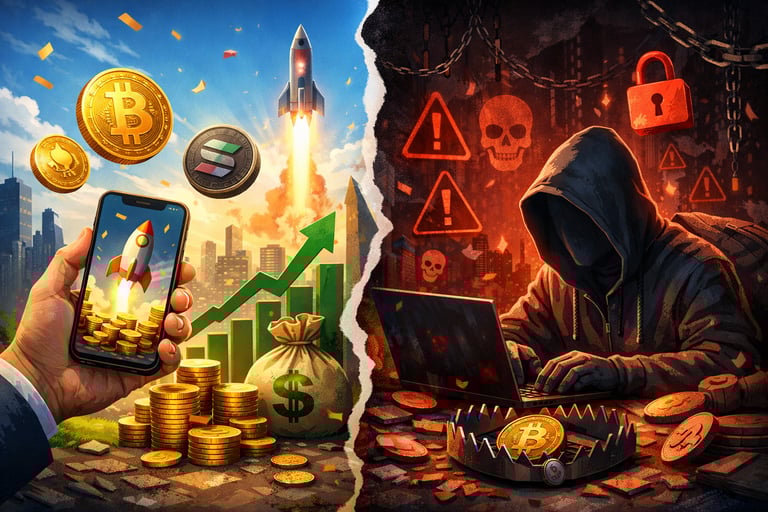
In 2026, many crypto airdrops require gas fees or upfront tokens. Is it worth participating Paid Crypto Airdrops ? This in-depth guide explains risks, rewards, and smart strategies, with insights inspired by Drop Finder.
LATEST AIRDROP
1/23/20263 min read
Introduction: Airdrops in 2026 Are Not What They Used to Be
Crypto airdrops were once simple. You connected a wallet, followed a few social accounts, and waited for free tokens. Early participants made life-changing money from projects that later exploded in value.
By 2026, that era is largely gone.
Today, a growing number of airdrops require crypto deposits, bridge transactions, NFT mints, or repeated gas-fee interactions. Many users now ask a serious question:
Should you participate in airdrops that require crypto and gas fees, or are they just expensive traps?
This blog provides a realistic, no-hype breakdown of paid-interaction airdrops in 2026—who should participate, who should avoid them, and how to evaluate them intelligently.
What Does “Airdrop Requiring Crypto or Gas Fees” Mean?
In 2026, most airdrops are no longer passive. Projects want proof of genuine users, not bots. As a result, they require some form of economic activity.
Common requirements include:
Paying gas fees to interact with smart contracts
Bridging assets between chains
Providing liquidity for a short period
Minting NFTs
Staking tokens temporarily
Voting or governance participation
None of these are free. Even on low-cost chains, fees add up over time.
Why Projects Now Demand Paid Participation
1. Bot Resistance
Free airdrops attracted massive bot farms. Requiring gas fees immediately filters out automated abuse.
2. Serious User Acquisition
Projects want users who understand Web3 mechanics and are willing to invest effort—not just dump tokens instantly.
3. Treasury Sustainability
Some protocols intentionally design airdrops to recycle fees back into protocol liquidity or development.
4. Regulatory and Tokenomics Pressure
In 2026, token launches face more scrutiny. Controlled, engagement-based distributions are safer than mass free giveaways.
The Psychology Trap: “I’ve Already Paid Gas”
One of the biggest dangers of paid airdrops is psychological, not technical.
Once users spend money on:
Gas fees
Bridges
NFTs
Small token stakes
They feel committed, even when warning signs appear. This leads to sunk-cost bias, where people keep spending “just a little more” to justify earlier costs.
Understanding this bias is critical before participating.
The Real Cost of an Airdrop in 2026
Let’s break it down realistically.
Gas Fees
Even on L2s and alternative chains, repeated interactions can cost anywhere from:
$5–$30 on low-fee chains
$50–$150 on major networks
Opportunity Cost
Funds locked in airdrop farming could be earning yield elsewhere or held safely in stablecoins.
Time Cost
Many airdrops require weeks or months of consistent interaction.
In truth, most “free” airdrops now cost money, time, and attention.
When Paid Airdrops Are Actually Worth It
Despite the risks, some paid airdrops are absolutely worth participating in—if you evaluate them correctly.
1. Strong Product Usage
If users are genuinely using the product—not just farming—it’s a positive signal.
2. Clear Token Utility
Does the token have governance rights, fee sharing, or ecosystem necessity?
3. Transparent Team and Roadmap
Anonymous teams are common in crypto, but long-term anonymous projects without transparency are red flags.
4. Reasonable Fee Structure
Projects that force excessive transactions or unnecessary steps are often extracting value, not building it.
Red Flags: When You Should Walk Away Immediately
You should avoid airdrops that:
Require large upfront token purchases
Push referral spam aggressively
Offer vague or constantly changing rules
Focus more on hype than product
Promise guaranteed returns
Force NFT mints with unclear utility
In 2026, scams are more sophisticated. Many airdrops are designed to drain gas and liquidity, not reward users.
The Role of Drop Finder in Smarter Airdrop Decisions
This is where platforms like Drop Finder become extremely valuable.
Instead of chasing random Twitter threads or Discord rumors, Drop Finder focuses on:
Tracking real ecosystem activity
Filtering low-quality airdrops
Highlighting projects with long-term potential
Organizing information clearly instead of hype-driven chaos
In a year like 2026, information quality matters more than speed. Being early is useless if the project is worthless.
Small Capital vs Large Capital: Different Rules Apply
If You Have Small Capital
Limit gas budgets strictly
Avoid airdrops requiring multiple NFT mints
Focus on low-cost chains
Choose 1–2 high-quality opportunities instead of many
If You Have Larger Capital
Diversify across ecosystems
Track ROI per interaction
Avoid emotional attachment
Exit early if metrics look weak
Airdrop farming should never feel like gambling.
Airdrops vs Buying Tokens Directly
A critical question for 2026:
Is it better to farm an airdrop or simply buy the token later?
Often, buying after launch:
Saves gas
Reduces time investment
Provides clearer price discovery
Airdrops only make sense when:
Allocation potential is significant
Project fundamentals are strong
Your interaction costs are capped
Why Many 2026 Airdrops Disappoint at Launch
Common reasons:
Oversupply of tokens
Farmers dumping instantly
Weak post-launch utility
Inflated expectations
This is why expectation management is essential. Airdrops are no longer guaranteed profit events.
A Practical Framework Before Joining Any Paid Airdrop
Ask yourself:
How much am I willing to lose?
Does this project solve a real problem?
Are users actually using it?
Is the cost proportional to potential upside?
Would I still like this project if there were no airdrop?
If you cannot answer these honestly, do not participate.
The Future of Airdrops Beyond 2026
Trends suggest:
Fewer but higher-quality airdrops
More emphasis on long-term participation
Reduced “free money” mentality
Greater integration with governance and staking
Airdrops are evolving into user ownership programs, not marketing stunts.
Final Verdict: Should You Participate in Airdrops That Require Crypto and Gas Fees in 2026?
Yes—but only selectively and strategically.
Blind participation is no longer viable. Paid airdrops are neither good nor bad by default. They are tools—and tools can build wealth or destroy capital depending on how they’re used.
If you:
Control costs
Avoid hype
Use structured platforms like Drop Finder
Think long-term instead of chasing quick wins
Then airdrops can still be a valuable part of your crypto strategy in 2026.
If not, they can quietly drain your portfolio one gas fee at a time.
Closing Thoughts
In 2026, the smartest crypto participants are not the fastest—they are the most disciplined.
Treat airdrops like investments, not lotteries. The difference between profit and regret lies entirely in decision quality, not luck.