Software vs Hardware Wallets in 2026 – Which Is Better for You?
Confused between software and hardware wallets in 2026? Learn the pros, cons, and security differences of both wallet types. Discover which one suits your crypto storage needs best — powered by DropFinder.
CRYPTO NEWS
10/14/20255 min read
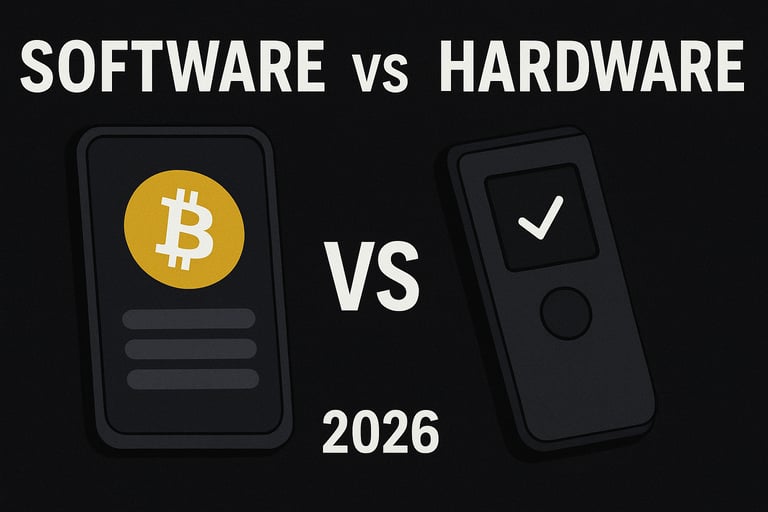
Software vs Hardware Wallet 2026: Which Is Better for You?
Introduction: The Battle for Crypto Security
As cryptocurrencies continue to dominate the digital economy in 2026, the most critical question every investor faces is—how should I store my assets safely?
The collapse of several exchanges, frequent hacks, and rising online scams have shown one clear truth: “Not your keys, not your coins.”
The choice between software wallets (hot wallets) and hardware wallets (cold wallets) determines how secure your holdings really are.
In this comprehensive Drop Finder guide, we’ll explore the key differences, pros and cons, real-world use cases, and 2026 trends to help you decide which wallet suits your crypto journey best.
1. Understanding the Basics: What Are Wallets in Crypto?
A crypto wallet is a tool that allows users to store, send, and receive digital assets like Bitcoin, Ethereum, Solana, and thousands of other tokens.
However, wallets don’t literally “store” coins—they store the private keys that grant access to your funds on the blockchain. Whoever controls the keys controls the crypto.
That’s why choosing between software and hardware wallets isn’t just about convenience—it’s about ownership, security, and peace of mind.
2. Software Wallets: The Hot and Handy Option
Software wallets—also known as hot wallets—are applications or browser extensions that connect directly to the internet.
Examples include MetaMask, Trust Wallet, Phantom, Rainbow, and Coinbase Wallet. These wallets are easy to use, free to download, and ideal for frequent trading or DeFi interactions.
Advantages of Software Wallets in 2026:
Convenience and Accessibility:
You can access your crypto instantly via desktop, mobile, or web. Perfect for daily traders or NFT enthusiasts who need quick access.Integration with DApps and Exchanges:
Most decentralized apps (DApps), exchanges, and Web3 platforms integrate directly with MetaMask or Trust Wallet, making transactions seamless.Free to Use:
Unlike hardware wallets, software wallets cost nothing upfront. You just need to install and secure your seed phrase.Multi-Chain Compatibility:
Modern wallets now support multiple chains—Ethereum, BNB Chain, Solana, and even Bitcoin—within a single interface.
Disadvantages:
Security Risks:
Being online makes them vulnerable to phishing attacks, malware, and hacks.User Error:
Losing your device or accidentally revealing your seed phrase could lead to irreversible losses.Exchange Hacks & Browser Exploits:
Browser-based wallets are especially at risk if your device isn’t properly secured.
3. Hardware Wallets: The Cold and Secure Fortress
Hardware wallets—often called cold wallets—are physical devices that store your private keys offline, away from internet exposure.
Popular brands include Ledger, Trezor, and SafePal.
These devices are designed for long-term holders who prioritize security over speed. When you need to send crypto, you simply connect the device to your computer or mobile via USB or Bluetooth, confirm the transaction physically, and safely disconnect again.
Advantages of Hardware Wallets in 2026:
Maximum Security:
Since your keys never touch the internet, hackers can’t steal them remotely.Ideal for Long-Term Storage:
Great for HODLers storing assets like BTC, ETH, or SOL for years.Tamper-Proof Chips:
Modern wallets like the Ledger Nano X use certified security chips (CC EAL5+) to prevent unauthorized access.Multi-Asset Support:
Many hardware wallets support hundreds or even thousands of coins and tokens.
Disadvantages:
Cost:
A hardware wallet can cost anywhere between $50 and $200 depending on the model.Less Convenient for Frequent Traders:
You need to connect the device physically for every transaction—slower than hot wallets.Risk of Loss or Damage:
Losing or breaking your device can be problematic, though recovery is possible using your seed phrase.
4. The 2026 Evolution: Smarter, Safer, and More Connected
By 2026, both software and hardware wallets have evolved dramatically.
Software wallets now integrate AI-driven phishing detection and advanced biometric protection.
Hardware wallets feature mobile app pairing, Bluetooth support, and even built-in screens with QR verification to prevent tampering.
For instance, the Ledger Stax, launched in late 2025, features an E-Ink curved display, wireless charging, and a mobile interface—bridging the gap between hardware security and smartphone convenience.
Meanwhile, software wallets like MetaMask have introduced cloud seed phrase backups, allowing encrypted storage across devices while maintaining privacy.
This convergence has blurred the line between “hot” and “cold.” You can now have hybrid setups, combining both for maximum security.
5. Security Showdown: Which Is Safer?
Let’s settle the debate on safety.
Hardware wallets win in pure security terms because they isolate your private keys from online threats. Even if your computer is infected with malware, a hardware wallet ensures your keys never leave the device.
However, security also depends on user behavior. A careless hardware wallet owner who stores their seed phrase in a cloud folder is more vulnerable than a cautious software wallet user with encrypted backups and strong security habits.
So, safety isn’t just about the wallet type—it’s about your personal discipline.
6. User Experience: Convenience vs Peace of Mind
In 2026, crypto users fall into two main groups:
Active Users (DeFi, NFTs, Trading):
These users need constant access, flexibility, and quick interaction with DApps. For them, software wallets remain the better choice.Long-Term Holders (Investors, Institutions):
Those holding large amounts of BTC, ETH, or stablecoins prefer hardware wallets, as they rarely need daily transactions.
Many users now adopt a dual-wallet strategy:
They keep small amounts in a software wallet for transactions and the bulk of their funds in a hardware wallet for cold storage.
This approach offers the best of both worlds—convenience and security.
7. Top Wallet Recommendations for 2026
Best Software Wallets:
MetaMask – Still the king of DeFi integration.
Trust Wallet – All-in-one multi-chain wallet owned by Binance.
Phantom – Excellent for Solana and cross-chain support.
Rabby Wallet – Rising favorite among Ethereum power users with safety alerts.
Best Hardware Wallets:
Ledger Nano X / Ledger Stax – Bluetooth-enabled, secure, and sleek.
Trezor Model T – Open-source firmware and strong privacy.
SafePal S1 – Affordable with built-in camera for QR signing.
Keystone Pro – Air-gapped with fingerprint and touchscreen features.
8. Security Tips for 2026 Wallet Users
Always back up your seed phrase on paper or a metal plate, never digitally.
Avoid clicking random links or airdrop claims—phishing is still the #1 cause of wallet drains.
Enable passphrases or 2FA where possible.
Regularly check wallet permissions on DeFi platforms and revoke unused ones.
Keep firmware updated for hardware wallets and ensure your computer is malware-free.
These habits separate smart investors from those who lose everything to a single careless click.
9. Institutional Adoption and Wallet Regulation in 2026
In 2026, global regulation has matured around crypto custody. Institutions and hedge funds now use multi-signature hardware wallets combined with insurance coverage for added protection.
The concept of “custody-as-a-service” is growing, allowing enterprises to combine cold storage security with regulated oversight.
Meanwhile, self-custody remains the heart of crypto culture. The events of the 2022 FTX collapse and 2024 centralized exchange hacks have permanently shifted users toward self-custody solutions.
As Drop Finder research shows, more than 70% of retail crypto holders in 2026 now use at least one form of hardware wallet—an all-time high.
10. The Future: Wallets Beyond 2026
The next evolution of wallets will integrate biometric encryption, AI-driven security checks, and multi-device recovery systems.
Some blockchain networks are exploring account abstraction, where users can recover lost wallets using trusted guardians or smart contract automation—removing the fear of seed phrase loss.
Hardware wallets might soon sync with quantum-resistant chips, ensuring safety even in a post-quantum world.
Meanwhile, software wallets are moving toward social login systems (using Google, Apple, or email) without sacrificing decentralization—thanks to MPC (multi-party computation) technology.
By 2030, you may not even notice you’re using a wallet. It’ll be embedded within your phone’s OS or Web3 identity layer—secure yet seamless.
Conclusion: Which Wallet Is Right for You?
When deciding between software and hardware wallets, it all depends on your crypto lifestyle:
Choose a Software Wallet if:
You trade daily, interact with DeFi, or enjoy exploring NFTs and Web3 games.Choose a Hardware Wallet if:
You hold large assets long-term and prioritize maximum protection over convenience.
Or better yet—use both.
Keep your spending coins hot, and your long-term holdings cold.
In the world of crypto, security is freedom—and as 2026 reminds us, true ownership means taking control of your keys.
Drop Finder Reference:
This article is brought to you by Drop Finder, your trusted crypto intelligence hub for blockchain insights, wallet reviews, airdrop tracking, and the latest market trends shaping the decentralized world of 2026.