The Biggest Crypto Fraud Ever How Billions Vanished Overnight & What Every Investor Must Learn
The biggest crypto fraud ever wiped out billions of dollars, destroyed investor trust, and exposed shocking loopholes inside the digital asset industry. From hype to total collapse, here’s the full story, hidden truths, and the lessons every crypto investor must understand before investing again.
CRYPTO NEWS
2/15/20264 min read
When the Crypto Revolution Cracked
Cryptocurrency was supposed to eliminate corruption, middlemen, and financial manipulation. Blockchain technology promised transparency, security, and decentralization. Millions across the globe believed they were witnessing the birth of a new financial era.
Then everything changed.
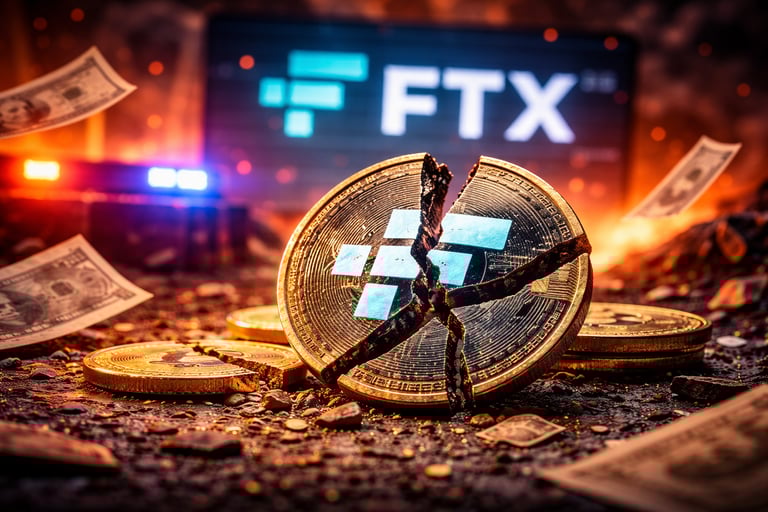
In one of the most dramatic financial collapses in modern history, billions of dollars disappeared almost overnight. What was once considered one of the safest and most powerful crypto exchanges in the world became the center of the biggest crypto fraud ever recorded.
The company was FTX.
The man behind it was Sam Bankman-Fried.
The Meteoric Rise of FTX
Founded in 2019, FTX exploded onto the global stage at record speed. Within just a few years, it had:
Become one of the largest crypto exchanges worldwide
Achieved a valuation of over $32 billion
Secured funding from top venture capital firms
Sponsored major sports teams and stadiums
Partnered with global celebrities
Sam Bankman-Fried, often referred to as SBF, was portrayed as a brilliant young billionaire with messy hair and a simple lifestyle. He claimed his mission was “effective altruism” — earning billions to donate most of it to charity.
He appeared before lawmakers. He spoke at high-profile conferences. Media outlets treated him like the responsible face of crypto.
Investors believed their money was safe.
But behind the scenes, FTX was operating in a way that would eventually shake the entire financial world.
The Secret Trading Arm: Alameda Research
Before FTX, Sam Bankman-Fried founded Alameda Research, a quantitative crypto trading firm.
While FTX presented itself as a neutral exchange — a platform where users could trade safely — Alameda was actively trading and speculating in the market.
The critical issue? The two were deeply intertwined.
Investigations later revealed that customer deposits on FTX were allegedly funneled to Alameda Research to fund risky trading strategies and cover losses. In traditional finance, this would be comparable to a bank secretly lending customer savings to its own hedge fund without consent.
This was not just risky. It was catastrophic.
The Collapse: How It All Fell Apart
The downfall began in November 2022 when reports surfaced questioning Alameda’s balance sheet. A leaked document suggested that a large portion of its assets consisted of FTT — a token created by FTX itself.
In simple terms:
FTX created a token (FTT).
Alameda held massive amounts of that token.
FTX used it as collateral.
The value was artificially inflated.
When confidence started to shake, withdrawals surged. Customers rushed to withdraw billions from FTX within days.
FTX did not have the liquidity.
It could not honor withdrawals.
Within a week, one of the largest crypto exchanges in the world filed for bankruptcy.
Bankruptcy and Criminal Charges
FTX filed for Chapter 11 bankruptcy in the United States in November 2022. The newly appointed CEO described the situation as one of the worst cases of corporate control failure he had ever seen.
Shortly after the collapse:
Sam Bankman-Fried was arrested.
Charges included wire fraud, securities fraud, and money laundering.
Billions in customer funds were declared missing.
The fraud was not just mismanagement. Prosecutors argued it was a deliberate misuse of customer deposits.
Billions of dollars in wealth evaporated.
The Ripple Effect Across the Crypto Market
The FTX collapse didn’t just impact its users. It triggered a domino effect:
Major crypto hedge funds went bankrupt.
Lending platforms froze withdrawals.
Bitcoin and altcoins crashed.
Investor confidence collapsed.
Exchanges and platforms that had exposure to FTX faced liquidity crises. The entire crypto ecosystem entered a severe downturn.
For many retail investors, this was their first brutal lesson in counterparty risk — the risk that the platform holding your funds might fail.
Why This Became the Biggest Crypto Fraud Ever
Several factors made this case historic:
1. Scale of Losses
Estimates suggest over $8 billion in customer funds were misused or became inaccessible.
2. Institutional Involvement
Major venture capital firms invested hundreds of millions into FTX, giving it an appearance of legitimacy.
3. Political and Regulatory Access
Sam Bankman-Fried had strong connections in Washington. This created a perception of safety and credibility.
4. Speed of Collapse
Few financial institutions have imploded so quickly at such massive scale.
This was not a small rug pull. It was a global financial shock.
The Psychology Behind the Fraud
Fraud at this scale is rarely just about numbers. It is about psychology.
Blind Trust in Charisma
SBF projected intelligence and humility. Investors trusted his narrative.
Fear of Missing Out (FOMO)
Crypto’s explosive growth encouraged rapid decision-making without deep due diligence.
Authority Bias
Media coverage and celebrity endorsements created an illusion of legitimacy.
Overconfidence in Technology
Many believed blockchain transparency automatically meant business transparency.
Technology cannot eliminate human greed.
Was This the Only Major Crypto Fraud?
No.
While FTX stands as one of the largest collapses, crypto history includes other infamous frauds such as:
Mt. Gox — which lost 850,000 Bitcoin in 2014
OneCoin — a multi-billion-dollar global Ponzi operation
The BitConnect collapse
However, FTX was different. It was deeply embedded in mainstream finance and had institutional backing at the highest levels.
That scale makes it arguably the biggest crypto fraud ever.
Lessons Every Crypto Investor Must Learn
If there is one positive outcome from this disaster, it is education. Here are the critical lessons:
1. Not Your Keys, Not Your Coins
Holding assets on centralized exchanges exposes you to custodial risk.
2. Transparency Matters
Always question how platforms generate yield or sustain profits.
3. Avoid Blind Trust
Charismatic founders are not proof of integrity.
4. Diversification Is Essential
Never concentrate all funds in a single platform.
5. Regulation Is Evolving
Crypto regulation remains inconsistent globally. Understand jurisdictional risks.
The Aftermath: Can Trust Be Rebuilt?
The FTX collapse forced governments to accelerate regulatory frameworks. Exchanges now face higher scrutiny. Proof-of-reserves systems became more common.
But rebuilding trust takes time.
For long-term believers in Bitcoin and blockchain technology, the fraud was a painful reminder: decentralization only works if users actively practice it.
Crypto is not inherently fraudulent — but poor governance, lack of oversight, and unchecked power create fertile ground for disaster.
Final Thoughts: Greed, Power, and Accountability
The biggest crypto fraud ever was not caused by blockchain technology. It was caused by human decisions.
The story of FTX is a warning about concentration of power, lack of transparency, and the speed at which hype can override caution.
Financial revolutions are not immune to old-world corruption.
In the end, this collapse reshaped the crypto industry. It forced investors to mature, regulators to act, and platforms to become more transparent.
The question now is not whether crypto survives.
The question is whether investors have truly learned.