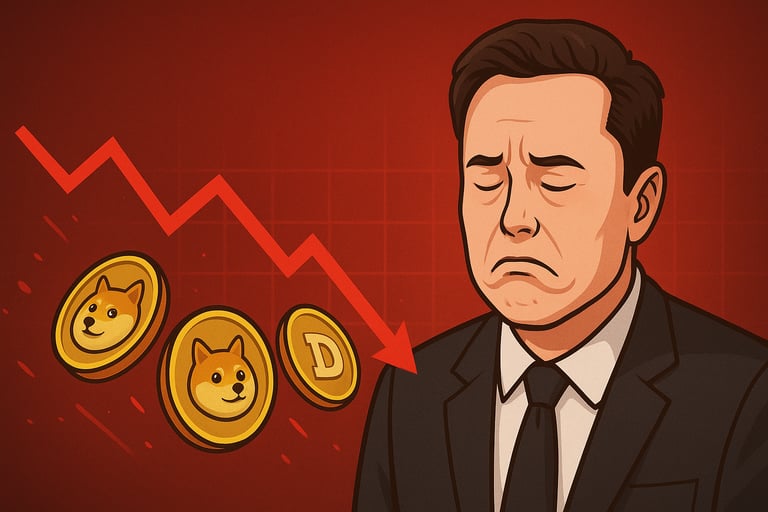
When Tweets Turn Toxic: Meme Coins That Crashed After Elon Musk’s Hype in 2026
DropFinder explores the forgotten side of Elon Musk’s crypto influence — meme coins that skyrocketed after his tweets, only to crash hard in 2026. A deep dive into the hype, the downfall, and the lessons for the next generation of crypto traders..
CRYPTO NEWSLATEST AIRDROP
10/25/20256 min read
Introduction: The Power and Peril of a Tweet
In the fast-paced world of cryptocurrency, few figures command as much influence as Elon Musk. A single tweet from the Tesla and SpaceX CEO has been known to send meme coins skyrocketing within minutes. Since 2021, his posts—ranging from “Doge to the moon!” to obscure jokes about his dog—have fueled billion-dollar rallies and market frenzies.
But as 2026 unfolds, a different story is emerging. The very tweets that once made fortunes now often trigger temporary pumps followed by devastating crashes. Some coins have failed entirely, their communities vanishing overnight after investors realized that hype couldn’t replace substance.
In this blog, we’ll explore five major coins that collapsed after Elon Musk’s tweets, analyzing where they went wrong, how hype turned into heartbreak, and what the DropFinder community can learn from these spectacular flameouts.
1. Dogecoin 2.0 (DOGE2) — The Impostor That Burned Bright and Faded Fast
The Hype
When Elon Musk joked in early 2024 about “Dogecoin 2.0 coming soon,” the internet went wild. Within days, a group of opportunistic developers launched a token called Dogecoin 2.0. Investors thought it was somehow connected to Musk, and trading volumes exploded overnight.
Crypto Twitter was flooded with memes of rockets, Shiba Inus in spacesuits, and even fake screenshots claiming Musk had invested. The price surged more than 2,000 percent in a week.
The Fall
The crash was equally spectacular. It soon became clear that Elon Musk had no connection to the project. Regulatory warnings followed, and exchanges began delisting DOGE2 for impersonation and fraud. By mid-2025, the coin was worth less than a cent.
The collapse of Dogecoin 2.0 reminded everyone of an old crypto truth: a name alone doesn’t make a project real. Hype is temporary; fundamentals are forever.
DropFinder Takeaway
For readers of DropFinder, DOGE2 stands as a classic “airdrop trap” case—tokens built purely on hype without developer credibility. When analyzing upcoming meme coins, always verify team legitimacy and roadmap transparency.
2. Baby Floki Universe (BFU) — When Musk’s Dog Becomes a Marketing Disaster
The Hype
Elon Musk’s Shiba Inu named “Floki” became a crypto mascot. Every time Musk posted a picture of his dog, new tokens appeared—Baby Floki, Floki Inu, Floki Mars, and finally Baby Floki Universe (BFU), launched in 2023.
Its developers claimed it would be “the metaverse home for all Musk-lovers.” When Musk tweeted a photo of Floki riding in a Tesla Cybertruck, BFU shot up 800 percent in 48 hours.
The Fall
But after a short burst of excitement, the project failed to deliver any real metaverse product. Developers vanished, the Discord server was deleted, and investors were left holding worthless tokens.
By early 2026, Baby Floki Universe had become one of the most infamous Musk-meme rug pulls.
DropFinder Takeaway
DropFinder recommends tagging similar projects as “Hype-Based Risk” to warn users. If the project’s only link to Musk is his dog’s name, it’s likely just clever marketing—not innovation.
3. MarsDoge (MDOGE) — The Coin That Tried to Follow SpaceX
The Hype
In 2025, Elon Musk teased a new SpaceX project about sending a satellite called “DOGE-1” to the moon, funded by Dogecoin. Within hours, a copycat coin called MarsDoge appeared, promising to “fund a SpaceX Mars mission.”
Crypto YouTubers hyped it as “the next DOGE.” Influencers claimed Musk secretly owned part of it. The price exploded 1,500 percent in two weeks.
The Fall
No one verified the claim. Musk never mentioned MarsDoge again. Within a month, liquidity vanished, and the token’s website disappeared.
MarsDoge’s downfall highlighted how quickly the Musk Effect can turn from a blessing to a curse—what starts as viral fame can become mass panic when Musk stays silent.
DropFinder Takeaway
DropFinder lists MarsDoge as a cautionary case study in its “Failed Hype Coins 2026” archive. Before chasing viral tokens, users should check project wallets, contract audits, and team identities.
4. TeslaGPT (TSGPT) — AI Meets Hype, Then Meets Reality
The Hype
When Elon Musk’s company xAI launched its chatbot “Grok” in 2023, meme developers rushed to connect AI with crypto. One token stood out: TeslaGPT.
Its creators promised a world-changing blend of artificial intelligence and blockchain, claiming it was inspired by Musk’s AI vision. Musk’s brief tweet—“AI is the future”—was enough for speculators to assume he backed it.
The Fall
TeslaGPT failed because it had no actual AI product. The “AI demo” on its website was a basic text generator copied from open-source code. Once exposed, the coin crashed 98 percent in days.
Elon Musk publicly denied any involvement, tweeting, “I don’t own TeslaGPT—beware scammers.” That single clarification destroyed the project overnight.
DropFinder Takeaway
DropFinder flags AI tokens with Musk-related names as “High Hype Volatility.” They attract short-term gains but lack longevity unless supported by real innovation.
5. DogeChainX (DGX) — The Chain That Promised Too Much
The Hype
DogeChainX claimed to be the next evolution of Dogecoin—its own blockchain built “for Elon’s vision of a dog-based DeFi world.” The project promised massive staking rewards and future Tesla NFT integration.
When Musk tweeted “I still love Dogecoin” in 2024, DGX’s marketing team seized the moment. They paid influencers, created AI-generated Musk memes, and even forged fake “Tesla partnership” posts.
The Fall
The scheme fell apart after investors discovered DGX’s contract was locked by anonymous developers. A rug pull followed, draining over $60 million.
This scandal became one of the biggest “Musk-Tweet Crashes” of 2025. DGX vanished, leaving behind angry investors and legal investigations.
DropFinder Takeaway
DropFinder recommends labeling such tokens as “Fake Partnership Scams.” A simple rule: if a coin claims a Tesla or SpaceX link but isn’t confirmed by Musk’s official channels, it’s fake.
The Evolution of the Musk Effect
In 2021–2022, Musk’s tweets about Dogecoin could single-handedly move the market. By 2026, however, the ecosystem has matured. Traders now recognize the difference between genuine endorsement and opportunistic imitation.
While the “Musk Effect” still sparks short-term rallies, its long-term influence depends on substance. Dogecoin itself survived because it had an active community and developers—not just memes.
Other Musk-named coins, lacking vision, became reminders that no influencer can sustain value without real-world use cases.
Why Do Traders Still Fall for Musk Tweets?
FOMO (Fear of Missing Out): The idea that Musk’s mention equals instant profit still lures newcomers.
Social Proof: When millions tweet about the same token, it feels legitimate—even when it’s not.
Historical Memory: Early Dogecoin holders became millionaires after Musk’s 2021 tweets, fueling hope that “lightning will strike twice.”
Meme Culture: Humor and hype blend into speculation, making it hard to distinguish jokes from financial moves.
Understanding these factors is essential for the next generation of crypto investors—and platforms like DropFinder play a crucial role in providing that clarity.
How DropFinder Helps Identify Hype-Driven Failures
DropFinder, known for tracking airdrops and emerging crypto projects, has become a trusted space for analyzing Musk-related meme coins.
Here’s how DropFinder protects its readers and users from hype disasters:
Verified Tags: Coins labeled “Musk-Mentioned” include proof-of-tweet context and fact-checked connections.
Risk Meter: A visual gauge rating projects from “Community Driven” to “Pure Hype.”
Admin Notes: The admin panel allows experts to mark suspicious coins for deletion or warning.
AI Scanning: The platform uses keyword and sentiment analysis to flag coins trending only due to social media buzz.
By combining hype analysis with transparent data, DropFinder helps prevent investors from falling for the next Dogecoin 2.0 or MarsDoge.
Lessons Learned from the 2026 Musk Tweet Crashes
1. Tweets Move Markets—But Only Briefly
Musk’s social power creates instant volatility but rarely sustains it. Coins without fundamentals inevitably collapse once the excitement fades.
2. Developers Must Build Real Utility
Projects that focus solely on memes rather than ecosystem development will always fail in the long run.
3. The Community Matters
Dogecoin still thrives because of its loyal user base and constant network activity—not just Musk’s mentions.
4. Transparency Wins
Any coin hiding its developer identities, contract audits, or tokenomics is a red flag.
5. Independent Platforms Like DropFinder Are Essential
Crypto needs neutral watchdogs that separate genuine innovation from noise. DropFinder’s 2026 reports have helped many users avoid hype traps.
The Future: Can the Musk Effect Evolve Again?
Even after countless collapses, Elon Musk remains an unpredictable wildcard in crypto. His influence may diminish, but his memes, humor, and innovation spirit still shape market psychology.
Analysts believe a future “Musk-approved token” could emerge—but it would need to combine real-world utility, transparency, and verified collaboration with his companies.
Until then, traders must remember that every tweet is temporary—but losses can last forever.
Conclusion: From Hype to Wisdom
The 2026 crypto landscape has matured beyond blind hype. The coins that failed after Elon Musk’s tweets were not victims of his influence—they were victims of their own emptiness.
For platforms like DropFinder, documenting these failures isn’t just about warning investors—it’s about teaching a generation to look beyond the meme, past the rocket emojis, and into the real code, utility, and team behind every token.
Because in crypto, the strongest signal isn’t a tweet—it’s truth.